Dark Sky Sites UK: Where the Milky Way Is Actually Visible
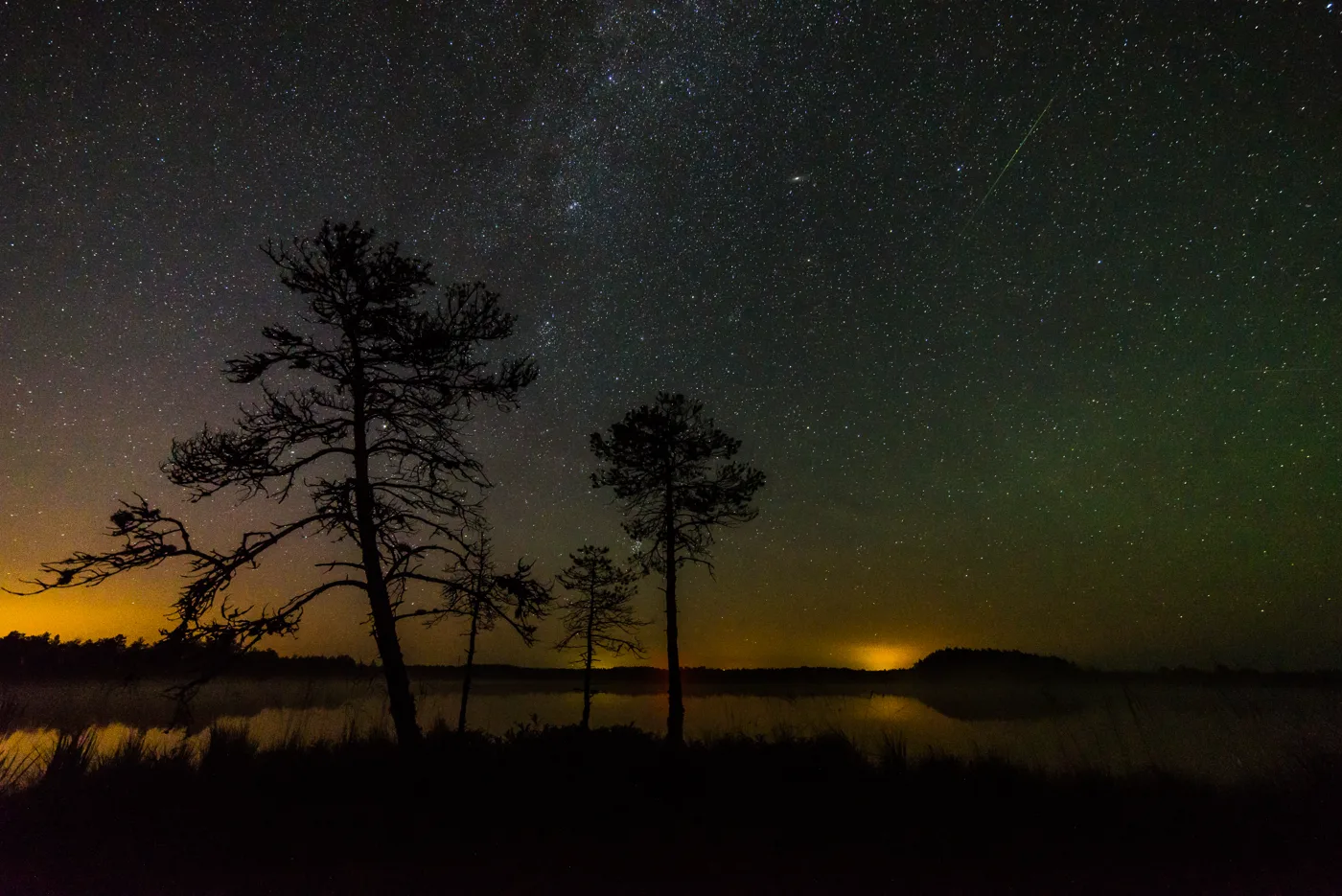
The certified dark sky sites UK stargazers can drive to fall into four different categories, and the label on the sign tells you more than most guides admit. A Dark Sky Sanctuary is not a posher Dark Sky Park. A Dark Sky Community is a town that has fixed its street lighting, not a place with a black sky. Get the tiers straight and the map stops being a list of pretty names and starts being a plan for a specific night.
Below is what each certification means, every UK site that holds one, and the thing that decides whether you see the Milky Way when you get there, which is not the certification at all.
The four tiers, in plain terms
DarkSky International, the body that certifies these places and was called the International Dark-Sky Association until 2023, runs several categories. Four matter here.
Dark Sky Sanctuary is the strictest and the rarest. It is reserved for genuinely remote places with exceptional sky quality and a fragile setting, usually somewhere with almost no permanent lighting for miles.
Dark Sky Reserve is a large area with a very dark core, surrounded by a populated buffer zone where councils and landowners have agreed to control lighting. Most of the English and Welsh national parks on this list are reserves.
Dark Sky Park is publicly or privately protected land, held dark for conservation and public enjoyment. Tiers within it run from bronze to gold.
Dark Sky Community is a town, village or landscape whose residents and council have committed to responsible lighting. The sky above it is better than a normal town’s, but it is not wilderness dark.
The practical hierarchy for what you will see with your eyes: sanctuary, then the core of a reserve or a gold-tier park, then the rest of a reserve, then a community.
The certified sites, nation by nation
England
Northumberland International Dark Sky Park is the big one. It was awarded gold tier status in 2013 and covers the whole of Northumberland National Park plus most of Kielder Water and Forest Park, 572 square miles, or 1,483 square kilometres, which makes it the largest area of protected night sky in Europe. Kielder Observatory sits inside it, opened in 2008 and running ticketed events most nights of the year. Book those in advance; they sell out, and this is not a place to turn up hoping.
Exmoor National Park became Europe’s first Dark Sky Reserve in 2011, covering 693 square kilometres across Devon and Somerset. For anyone in the south west it is the most accessible genuinely dark sky in England, and the park runs a network of signed stargazing spots with parking.
The South Downs National Park holds the Moore’s Reserve designation, named after Patrick Moore, and marks its tenth anniversary as a reserve in 2026. It is the one that matters most in the crowded south east: dark sky within reach of Brighton, Portsmouth and, at a push, London.
The North York Moors and the Yorkshire Dales were certified together as Dark Sky Reserves, giving northern England a very large block of protected sky either side of the A1.
Cranborne Chase, on the Dorset, Wiltshire and Hampshire borders, was the first National Landscape (what used to be called an AONB) designated in its entirety as an International Dark Sky Reserve.
Wales
Ynys Enlli, or Bardsey Island, off the tip of the Llŷn Peninsula, became the first International Dark Sky Sanctuary in Europe in 2023. It is the darkest certified sky in the UK and the hardest to reach: a small island with a weather-dependent boat crossing and accommodation booked well ahead. Worth planning a trip around rather than fitting into one.
Bannau Brycheiniog (Brecon Beacons) and Eryri (Snowdonia) are both Dark Sky Reserves, which means most of upland Wales is protected sky.
Elan Valley Estate in Powys is a Dark Sky Park, with reservoirs and open moorland and very little between you and the horizon.
Gower National Landscape near Swansea was awarded International Dark Sky Community status on 8 January 2025, the first in south Wales. It is a community designation rather than a park, so treat it as a good coastal sky close to a city, not a wilderness one.
Scotland
Galloway Forest Park started all of this. In November 2009 it became the UK’s first Dark Sky Park and only the fourth in the world. It is still one of the darkest and least crowded skies in Britain, run by Forestry and Land Scotland with car parks that stay open after dark.
Moffat in Dumfries and Galloway was certified as a Dark Sky Community in February 2016, Europe’s first town to manage it. Coll, in the Inner Hebrides, holds the same designation.
Channel Islands
Sark was the world’s first Dark Sky Island. It has no street lights and no cars, which is roughly the ideal condition. It is a Crown Dependency rather than part of the UK, but it is close enough to include and easy enough to reach from the south coast.
The 150 sites nobody puts on the map
Here is the part that most “best dark sky sites” articles leave out, and it is the part that will get you observing this month rather than next summer.
Alongside the international designations, the UK has its own Dark Sky Discovery Sites network: over 150 specific, named, publicly accessible spots with parking and a decent horizon. Crucially they are graded on what you can actually see:
- Milky Way class, marked with a gold star, means the Milky Way is visible to the naked eye. These sit in rural and coastal locations well away from towns, typically Bortle 4 or darker.
- Orion class, marked with a black star, means the seven main stars of Orion are visible to the naked eye. Usually Bortle 5 to 6, often on the edge of a national park or in a smaller town.
An Orion class site twenty minutes from your house will give you more observing nights per year than a Milky Way class site four hours away that you visit twice. Both are worth knowing. If you want to check the sky where you already live before you drive anywhere, our Bortle scale calculator will place it on the scale and tell you what that means for what you can see.
What actually decides whether you see anything
A gold-tier park under a full moon is worse than your back garden on a moonless night, and this catches out more first-time trips than light pollution does.
The Moon beats the site. A full Moon washes out the Milky Way completely, anywhere. Plan around the week either side of new moon and you have solved the biggest variable. Any of the stargazing apps will show you the phase weeks ahead.
Dark adaptation takes 20 to 30 minutes, and one glance at a phone screen resets it. This is the single most common reason people stand in a certified dark sky park and say they cannot see much. Use a red light, put the phone away, and give your eyes the full half hour before you judge the sky.
Cloud is the real enemy in Britain. Certification cannot fix the Atlantic. Check a proper astronomy forecast rather than a general weather app, and be willing to move the trip by a night.
Take binoculars, not a telescope, on a first trip. Under a genuinely dark sky, a pair of 10x50s shows you more in an hour than a beginner scope you are still learning to point. Our guide to the best binoculars for stargazing covers the sizes worth having, and what you can see with binoculars sets expectations honestly.
If this is your first proper night out, read naked-eye stargazing for beginners first. There is a lot to find without any equipment at all, and knowing five constellations changes the experience more than any purchase.
Etiquette that keeps these places dark
None of this is fussy; it is the reason the designations survive.
Park only in the marked car parks and do not block gates or passing places. Keep white torches off entirely once you are on site, and use red mode from the moment you leave the car. Do not use a car’s headlights or reversing lights to line up. Keep noise down, because a lot of these sites are working farmland or wildlife reserves at night. Take everything home with you, including the flask.
Frequently asked questions
Which is the darkest dark sky site in the UK? Ynys Enlli (Bardsey Island) off north Wales holds the highest tier, International Dark Sky Sanctuary, the first in Europe. For somewhere you can drive to, the core of Northumberland International Dark Sky Park and Galloway Forest Park are the strongest options.
Do I need to book or pay to visit a dark sky site? Usually not. The parks and reserves are open countryside and free to enter, though some car parks charge and a few close at dusk, so check the specific site. Organised events at places like Kielder Observatory are ticketed and sell out well in advance.
Can I see the Milky Way from an ordinary UK town? No. From most towns the Milky Way is invisible even on a perfect night, because the sky background is brighter than the band itself. You need roughly Bortle 4 or darker, which in practice means getting well away from built-up areas.
What is the difference between a Dark Sky Reserve and a Dark Sky Park? A reserve is a large area with a dark core plus a populated buffer zone that manages its lighting, so darkness varies across it. A park is protected land held dark throughout, graded from bronze to gold. A gold-tier park core is generally darker than the edge of a reserve.
When is the best time of year to go? Autumn and winter, for the simple reason that it gets dark early enough to observe at a sensible hour and the nights are long. June and July are close to useless in Scotland and northern England because the sky never gets fully dark. Aim for the moonless week and dress for standing still in the cold.
Do I need a telescope? Not for a first visit, and arguably not for a fifth. Your eyes plus 20 minutes of dark adaptation, or a pair of binoculars, will show you the Milky Way, meteors, star clusters and the Andromeda galaxy. Buy a telescope once you know what you want to look at, and read how to start stargazing before you spend anything.
Clear skies forecast? Get a nudge.
Our weekly email flags the next good UK observing window and one easy target to find.
Join the listMore from Starvest
Keep reading
Best Telescopes for Beginners in the UK (Tested by Price Bracket)
The best beginner telescopes in the UK by budget, from sub-£150 tabletop scopes to app-guided and smart telescopes, with real 2026 prices.
What Can You See with Binoculars at Night? A Realistic Astronomy List
A realistic list of what you can see with binoculars in astronomy, from the Moon and Jupiter's moons to Andromeda, with tips for spotting each from the UK.
How to Set Up and Use Your First Telescope (Step by Step)
How to use a telescope as a beginner: assemble the mount, align the finder, focus, and find your first targets. A clear step-by-step UK guide.