Eyepiece Eye Relief for Glasses: 15mm Minimum, 20mm Ideal
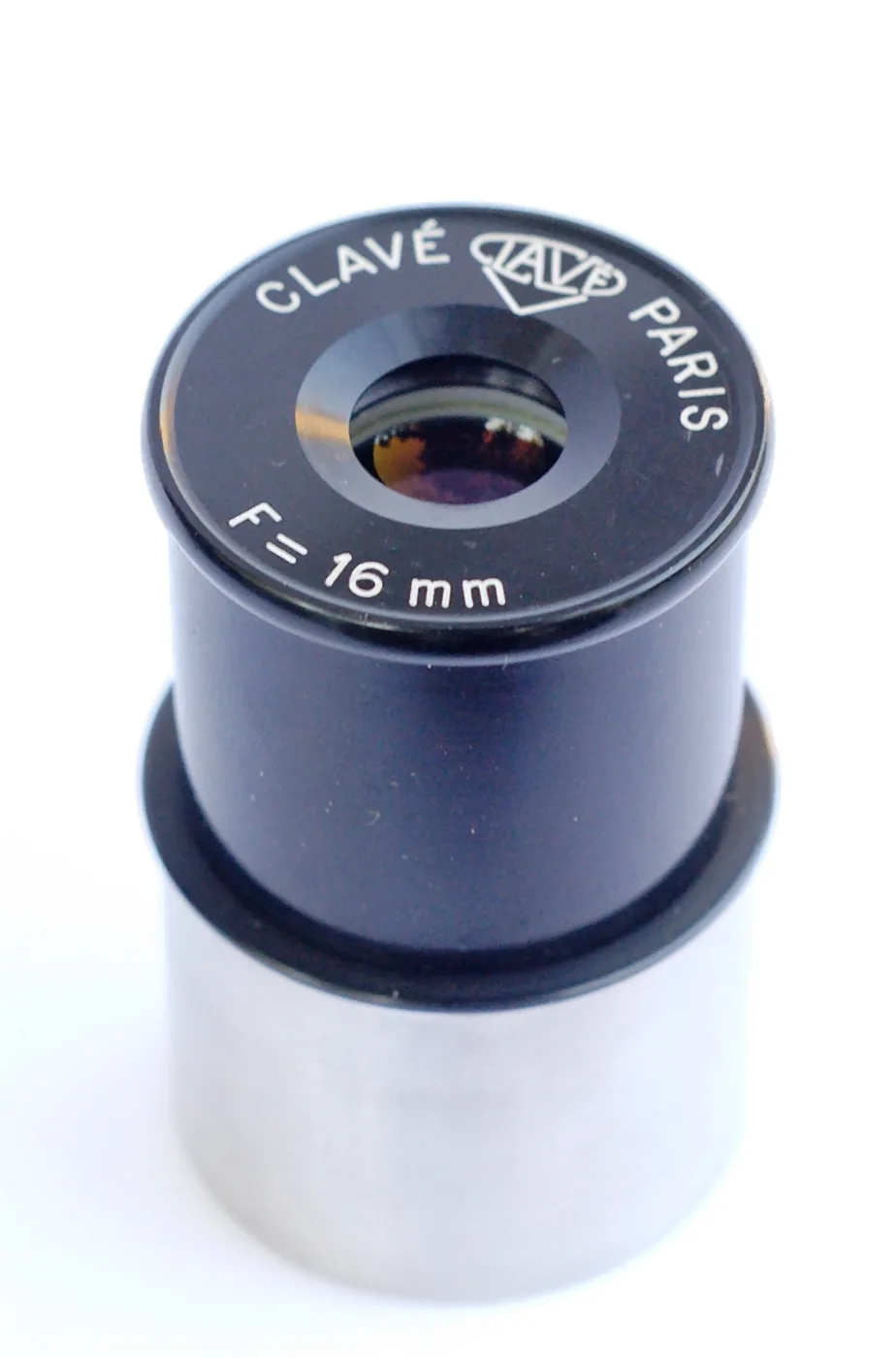
Eyepiece eye relief decides whether you can observe with your glasses on. It is the distance from the eyepiece’s last lens to the point where your eye sees the whole field. Glasses push your eye back by roughly the thickness of the frame and lens, so with spectacles you need at least 15mm of eye relief to see the full view, and 18 to 20mm before it feels comfortable rather than cramped.
The good news is that many glasses wearers do not need their glasses at the eyepiece at all. Whether you do depends on what your prescription corrects, and that question comes before which eyepiece to buy.
First: do you even need glasses at the eyepiece?
Your prescription has two main parts, and they behave very differently at a telescope.
- Short or long sight (the SPH, or sphere, number). The focuser corrects this completely. Take your glasses off, refocus, and the view is as sharp as anyone else’s. If this is all your prescription corrects, eye relief barely matters to you.
- Astigmatism (the CYL, or cylinder, number). The focuser cannot correct this. Stars draw out into short lines or crosses, and refocusing just flips the direction of the smear. If you have meaningful astigmatism, you either keep your glasses on or fit a corrector to the eyepiece.
Even astigmatism fades at high power. Its effect depends on the size of the beam of light leaving the eyepiece, the exit pupil, and Tele Vue notes that a smaller exit pupil minimises the effects of eyesight defects. Many astigmatic observers keep their glasses on for low-power, wide views and take them off for planets and the Moon. Our exit pupil calculator gives you the figure for any eyepiece and telescope.
So the people who most need long eye relief are those with astigmatism who want to use low and medium powers, plus anyone who simply prefers not to take glasses on and off in the dark.
How much eye relief is enough with glasses
| Eye relief | With glasses on |
|---|---|
| Under 12mm | You will not see the whole field. The edge of the view is cut off and the image blacks out as your eye moves. |
| 12 to 15mm | Usable with thin, close-fitting frames, often with the edge of the field lost. |
| 15 to 18mm | Workable for most glasses. You see the full field with your frames touching the eyecup. |
| 18 to 20mm or more | Comfortable. Room for the eyecup to sit against the lens without pressing. |
Thick lenses, varifocals and frames that sit far from the face all need more. If your glasses sit well forward of your eyes, aim for 20mm.
Why your short eyepiece is the problem
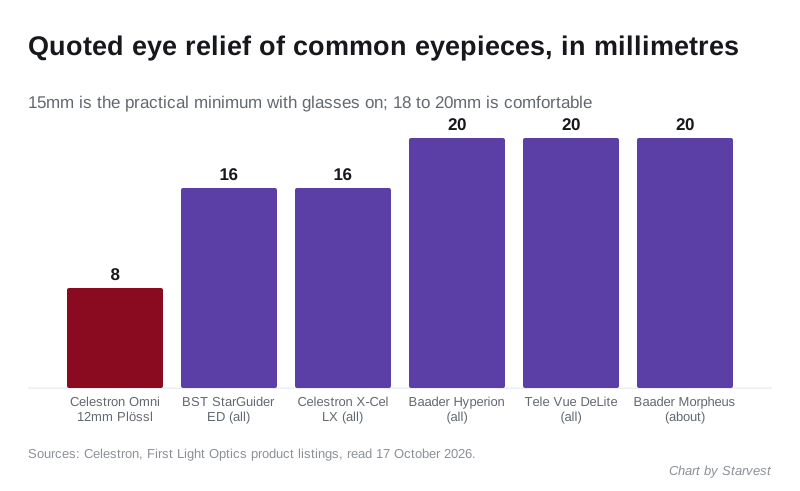
In a simple Plössl, the design bundled with most beginner telescopes, eye relief shrinks with focal length. A Celestron Omni 12mm Plössl gives about 8mm of eye relief, and a 6mm Plössl less again. That is why the long eyepiece that came with your scope feels fine with glasses and the short one is impossible: the 25mm is usually a perfectly good glasses eyepiece already.
Modern designs fix this by holding eye relief constant across every focal length. That is the feature to look for, because it means the high-power eyepiece in the set is as comfortable as the low-power one.
Eyepiece lines that work with glasses
These lines keep long eye relief at every focal length, which is what makes them suitable. All are sold by UK retailers such as First Light Optics. Check current prices with the retailer.
- Celestron X-Cel LX. 60-degree field, six elements, and 16mm of eye relief on all seven focal lengths, according to Celestron’s specification. Twist-up eyecups. A sound first upgrade if your prescription is mild and your frames are slim.
- BST StarGuider ED. 60-degree field, 16mm eye relief and twist-up eyecups, from 3.2mm to 25mm. The usual budget step up from bundled eyepieces in the UK.
- Baader Hyperion. 68-degree field and 20mm eye relief across the range. First Light Optics describes the field as “easily visible, even with eyeglasses”. Heavier and larger than the two above.
- Baader Morpheus. 76-degree field with eye relief of about 20mm, in 4.5, 6.5, 9, 12.5, 14 and 17.5mm. Wider views and a fold-down eyecup.
- Tele Vue DeLite. 62-degree field and 20mm eye relief on all nine focal lengths, from 3mm to 18.2mm, with a sliding, locking eyeguard. The premium choice, and compatible with Tele Vue’s astigmatism corrector.
If your budget allows only one upgrade, replace the shortest bundled eyepiece first. That is the one doing you the most harm.
Quoted eye relief is not always usable eye relief
Two eyepieces with the same printed figure can feel very different. Makers do not all measure from the same point: owners of BST eyepieces on Stargazers Lounge noted figures of 13mm and 18mm quoted for the same eyepiece, explained by one measuring from the top of the last glass surface and the other from the optical centre of the lens. And if the eye lens sits recessed below the top of the barrel, some of that distance is used up before your glasses reach it.
The practical test is simple: with glasses on and the eyecup folded or twisted fully down, can you see the edge of the field stop as a sharp black ring? If you can, the eyepiece works for you. If the edge goes soft and dark as your eye moves, it does not.
Eyecups: fold them down
Every eyecup on a glasses eyepiece should go down. Twist-up eyecups (StarGuider, X-Cel LX, Hyperion) wind down flush; rubber fold-down cups roll back. With glasses, the cup down and your lens almost touching the eyepiece is the correct position. Leave it up and you lose the very eye relief you paid for.
The downside of observing with glasses is stray light from the side. A dark hood over your head, or a hand cupped round the eyepiece, gets back most of the contrast.
Tele Vue Dioptrx: astigmatism correction without glasses
The Tele Vue Dioptrx is a lens that clips on top of an eyepiece and corrects astigmatism, so you can observe without glasses and still get sharp stars. First Light Optics’ Dioptrx listing gives the strengths as ¼ to 3½ dioptres and says to pick the one that matches the cylinder (CYL) figure on your prescription, ignoring the plus or minus sign. You rotate it to match your astigmatic axis.
It only fits long eye relief Tele Vue eyepieces: all DeLite, Delos and Ethos models, the Radian range, the 32, 40 and 55mm Plössls, and selected Panoptic and Nagler focal lengths, some with an adapter. It is worth considering if your CYL figure is large and you own or plan to buy Tele Vue eyepieces.
Do binoculars and Barlows help?
A Barlow lens keeps, and often slightly lengthens, the eye relief of the eyepiece you put in it, so a 12mm in a 2x Barlow gives the power of a 6mm with the 12mm’s eye relief. That makes it a cheap way to reach high power without a short, cramped eyepiece. Our Barlow lens explainer covers which ones are worth buying.
For binoculars the same rule applies, and most astronomy binoculars now quote eye relief. Look for 15mm or more and fold-down eyecups.
For more on how eye relief fits with focal length and apparent field, see our telescope eyepieces explained page.
Frequently asked questions
How much eye relief do I need if I wear glasses? At least 15mm to see the whole field, and 18 to 20mm to be comfortable. Thick lenses or frames that sit away from your face need the higher end.
Can I use a telescope without my glasses? Yes, if you are only short or long sighted: refocus the telescope and the view will be sharp. If you have astigmatism, stars will smear at low power, so keep your glasses on or use a corrector such as Tele Vue’s Dioptrx.
Why is my 6mm eyepiece impossible with glasses when my 25mm is fine? In Plössl eyepieces, eye relief shrinks with focal length. A 25mm Plössl usually has plenty, while a 6mm has very little. Replace the short one with a design that keeps long eye relief at every focal length.
Which eyepieces have 20mm eye relief? The Baader Hyperion and Tele Vue DeLite ranges both quote 20mm across their focal lengths, and the Baader Morpheus about 20mm. Celestron’s X-Cel LX and the BST StarGuider ED give 16mm.
Should eyecups be up or down with glasses? Down. Fold or twist the eyecup fully down so your glasses can get close enough to use the full eye relief.
Does astigmatism matter at high magnification? Much less. At high power the exit pupil is small, and a small exit pupil reduces the effect of eyesight defects, so many observers with astigmatism take their glasses off for planets and the Moon.
Clear skies forecast? Get a nudge.
Our weekly email flags the next good UK observing window and one easy target to find.
Join the listMore from Starvest
Keep reading
Best Telescopes for Beginners in the UK (Tested by Price Bracket)
The best beginner telescopes in the UK by budget, from sub-£150 tabletop scopes to app-guided and smart telescopes, with real 2026 prices.

What Can You See with Binoculars at Night? A Realistic Astronomy List
A realistic list of what you can see with binoculars in astronomy, from the Moon and Jupiter's moons to Andromeda, with tips for spotting each from the UK.
How to Set Up and Use Your First Telescope (Step by Step)
How to use a telescope as a beginner: assemble the mount, align the finder, focus, and find your first targets. A clear step-by-step UK guide.