National Geographic 76/350 Telescope Review: Worth It or Avoid?
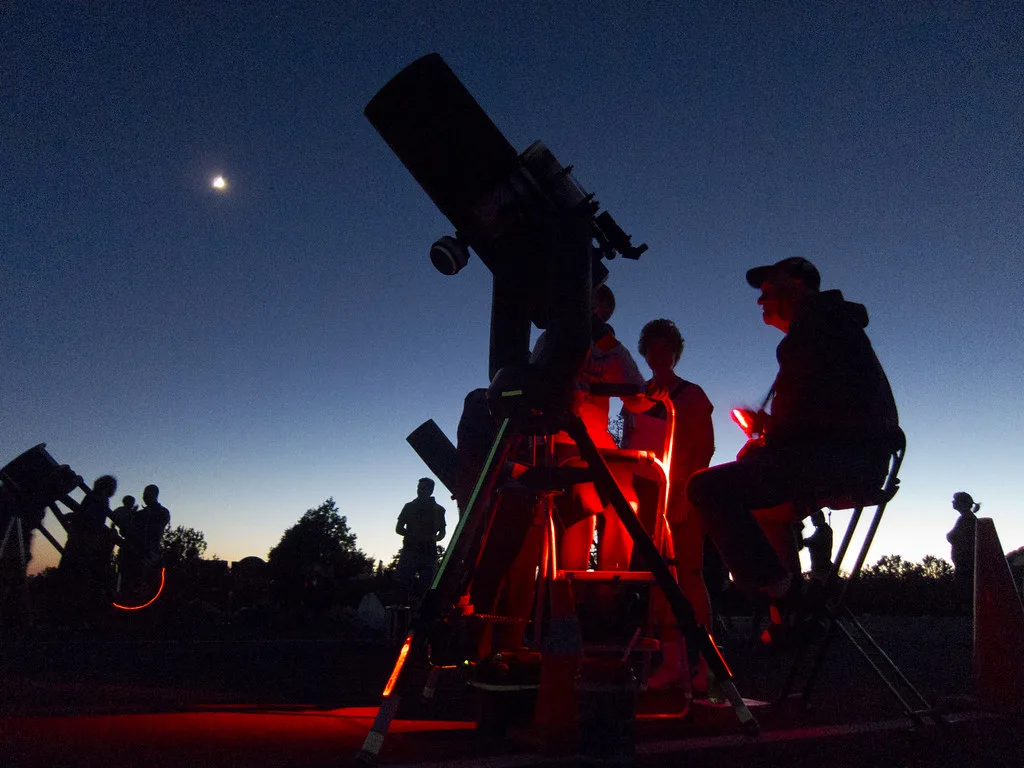
This National Geographic telescope review looks at the 76/350 compact reflector, one of the cheapest tabletop scopes you will find on a UK shelf, and asks the only question that matters for a first buy: does it show you enough of the real sky to be worth the money, or does it put people off astronomy for good? The short answer is that it is better than the £30 department-store refractors it sits near, and worse than the price-versus-view sweet spot a little further up the range. Here is the detail.
What you are actually buying
The National Geographic 76/350 is a 76mm aperture Newtonian reflector with a 350mm focal length, giving a fast focal ratio of f/4.6. It sits on a small azimuthal Dobson-style table mount, weighs around 1.9kg, and arrives fully assembled. In the box you get 20mm and 6mm eyepieces, a 2x Barlow lens, a basic moon filter and a compass built into the base. The brand belongs to Bresser, a long-established German optics maker, so this is not a nameless import, and the full specification sits on the Bresser product page.
That 76mm mirror is the number that counts. Aperture, not magnification, decides how much you can see, and 76mm gathers noticeably more light than the 50mm and 60mm refractors sold at the same price. If you want the reasoning behind that, our guide to telescope aperture explained is the place to start.
What it really shows you
On the Moon it is genuinely good. Craters, the terminator shadow line and the larger maria are sharp and rewarding, and for a child or a curious adult the first proper look at the lunar surface through this scope is the moment that hooks people. Jupiter shows as a small disc with its four Galilean moons strung out beside it, and Saturn’s rings are detectable as a change in shape rather than a crisp hoop. Bright star clusters like the Pleiades and the Beehive look lovely because the short focal length gives a wide, generous field of view.
What it will not do is deliver the crisp, high-power planetary detail the “up to 117x” marketing implies. A 76mm mirror runs out of useful magnification well before that, and pushing past roughly 120x to 150x on any small scope just gives you a bigger, dimmer, blurrier blob. If your image looks soft, that is usually the physics and the eyepiece, not a fault; our guide to a blurry telescope image walks through the real causes.
The eyepiece problem, and the honest catch
Here is the thing most cheerful listings skip. The supplied 6mm eyepiece, paired with the 2x Barlow, is where this scope reaches its headline magnification, and it is the weakest part of the package. Cheap short-focal-length eyepieces have tiny, uncomfortable eye relief and soft edges, so the very views the box promises are the least pleasant to actually use. In practice you will spend nearly all your time on the 20mm eyepiece at 18x for wide sky and moderate powers, and the 6mm will gather dust.
The mount is also only as steady as the table under it. Put it on a wobbly patio table and every touch sends the image shaking; put it on something solid at the right height and it settles down. It is a tabletop scope in the literal sense, so plan where it will live before you buy.
Who it is for, and who should spend a little more
Buy the National Geographic 76/350 if you want a low-risk, genuinely usable first scope for a child or a casual “let’s look at the Moon” household, and you accept that it is a taster rather than a lifelong instrument. It beats the toy refractors it competes with, and its portability means it actually gets used.
If astronomy might stick, the better-value move is to stretch to a 100mm or 130mm tabletop Dobsonian. The extra aperture transforms deep-sky and planetary views for not a lot more money, which is exactly why we rate the Sky-Watcher Heritage 100P and 130P as the sweet spot for beginners. Compare the whole field in our best telescopes for beginners in the UK roundup before you decide.
Frequently asked questions
Is the National Geographic 76/350 telescope any good? For its price it is decent and clearly better than the 50mm and 60mm toy refractors sold alongside it, because its 76mm mirror gathers more light. It shows the Moon well and reveals Jupiter’s moons and Saturn’s rings, but it is an entry-level taster rather than a scope you will keep for years, and its cheap high-power eyepiece is disappointing.
What can you see with a National Geographic 76/350? Expect good, detailed views of the Moon, Jupiter as a small disc with its four bright moons, Saturn’s rings as a distinct shape, and bright star clusters like the Pleiades. You will not see coloured nebulae or galaxy detail; those need darker skies and more aperture.
What magnification does the National Geographic 76/350 have? It is supplied to reach around 18x with the 20mm eyepiece up to a claimed 117x with the 6mm eyepiece and 2x Barlow. In real use a 76mm scope tops out at a useful magnification of roughly 120x to 150x, and the highest advertised power is soft and hard to focus.
Is a reflector telescope good for beginners? Yes. A reflector gives you the most aperture for your money, which is what actually improves the view, and tabletop Newtonian reflectors like this one are simple to point. The main upkeep is occasional collimation, which our refractor vs reflector guide explains.
Should I buy the 76/350 or spend a bit more? If it is a casual gift or a first taster on a tight budget, the 76/350 is a sensible pick. If there is real interest, a 100mm or 130mm tabletop Dobsonian gives dramatically better views for a modest extra outlay and is the smarter buy for anyone likely to stick with the hobby.
Clear skies forecast? Get a nudge.
Our weekly email flags the next good UK observing window and one easy target to find.
Join the listMore from Starvest
Keep reading
Best Telescopes for Beginners in the UK (Tested by Price Bracket)
The best beginner telescopes in the UK by budget, from sub-£150 tabletop scopes to app-guided and smart telescopes, with real 2026 prices.
What Can You See with Binoculars at Night? A Realistic Astronomy List
A realistic list of what you can see with binoculars in astronomy, from the Moon and Jupiter's moons to Andromeda, with tips for spotting each from the UK.
How to Set Up and Use Your First Telescope (Step by Step)
How to use a telescope as a beginner: assemble the mount, align the finder, focus, and find your first targets. A clear step-by-step UK guide.